July 14, 2021 . 8 MIN READ
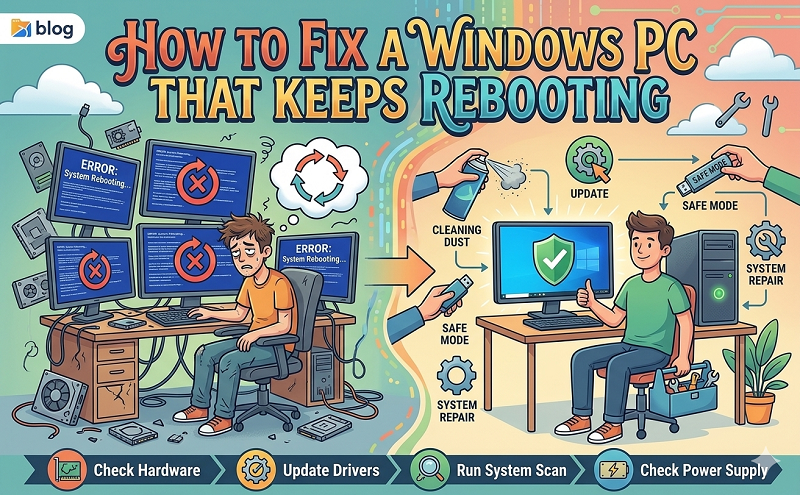
An important thing to know when troubleshooting a Windows PC is that whenever you’re unable to use it the regular way, also known as using it in Normal Mode, you can choose to boot it up in Safe Mode. Situations that won’t let you use the PC in Normal Mode are when:
Safe Mode is a special diagnostic mode for Windows, designed to start it up in a basic state with limited features and settings to make sure nothing else can interfere with the task you’re trying to perform and helps you narrow down the cause of an issue. Windows booted up this way looks different than what you are used to. The desktop background is plain black, the screen may look stretched or squished, and you will see the words Safe Mode in all four corners.

Only boot the PC into Safe Mode if you encounter one of the situations above and only use it to troubleshoot and fix issues. There are times when you need to cycle between Safe Mode and Normal Mode multiple times to find out if changes you’ve made in Safe Mode fixed your issue in Normal Mode. Once all issues are fixed, only use your PC in Normal Mode.


When your PC restarts abruptly on its own without an explanatory or warning message it may be because Windows encountered a failure and it triggered the default automatic restart feature. This is a protective feature but it can be disabled if you wish to find out what is causing the abrupt automatic restarts.
With this feature disabled, the next time Windows encounters a failure, the PC may either freeze, show a distorted image on the screen or show an error message in white text on a blue or black background.
If your PC won’t start up normally, you will need to start it up in Safe Mode instead to be able to disable this feature.


Fast Startup is a feature that allows Windows to boot up quicker by saving part of the system’s state in memory an restoring it on boot-up. This feature is best to be disabled when you’re troubleshooting an issue and rebooting the PC once or several times, as Windows wouldn’t be starting up in a fresh state.


Windows Updates can sometimes install incorrectly and cause the whole operating system to malfunction. In these cases, the most recent updates that were installed before your computer started malfunctioning, need to be uninstalled to revert Windows back to a correctly functioning state:
Sometimes it may be necessary to uninstall more then just one update. To narrow down which recent update is causing issues, only uninstall one update at a time then reboot the computer to observe the effects.


If you installed an app just before your computer started malfunctioning, it’s best to uninstall it to see if it’s the culprit of your issue. Sometimes apps can install incorrectly or may be incompatible with your system.
Sometimes it may be necessary to uninstall more then just one app. To narrow down which recent app is causing issues, only uninstall one app at a time then reboot the computer to observe the effects.


Some peripherals, such as printers, webcams, headsets, additional monitors, etc., may cause a computer to malfunction either from the start or over time, either temporarily or permanently. To determine whether one or more peripherals are affecting a computer’s operation, you need to unplug them and observe the computer’s behavior. If any peripherals were plugged in just before the computer started malfunctioning, unplug those first. Follow up with any additional peripherals until you reach the most essential ones such as a mouse and keyboard, however those could be the culprit as well.
Windows has a great utility called System Restore that allows you to revert your system to an earlier state called a restore point. Restore points are created automatically when you install a new app, driver, update, or when you create one manually. Restoring your PC to an earlier point in time will not affect your personal files, it will only revert system changes and remove anything installed after the restore point was created.
Do not turn off or power down your computer during a System Restore to avoid data loss or corruption. If you are using a laptop, make sure it is plugged into power so the battery does not run out during this process.


It can take a long time, over an hour in some cases, for System Restore to complete.


When you’ve exhausted all options in trying to fix a major issue with Windows, you may be left with resetting Windows to its original state your PC had right out of the box.
Depending on the reset method you choose, the process may delete all personal data and apps you have saved on the PC. If you need to back up all your personal data make sure you do so before proceeding.
Back Up All Personal Data


There is no going back, and no chance to retrieve anything removed during the reset process. Please make absolutely sure your backups are up to date before pressing Reset.